
Samaria Gorge history: village and park heritage
Read Samaria Gorge history through the former village, ancient sites, five churches and national park protection, with dated primary sources.
Last updated October 2026

Contents8
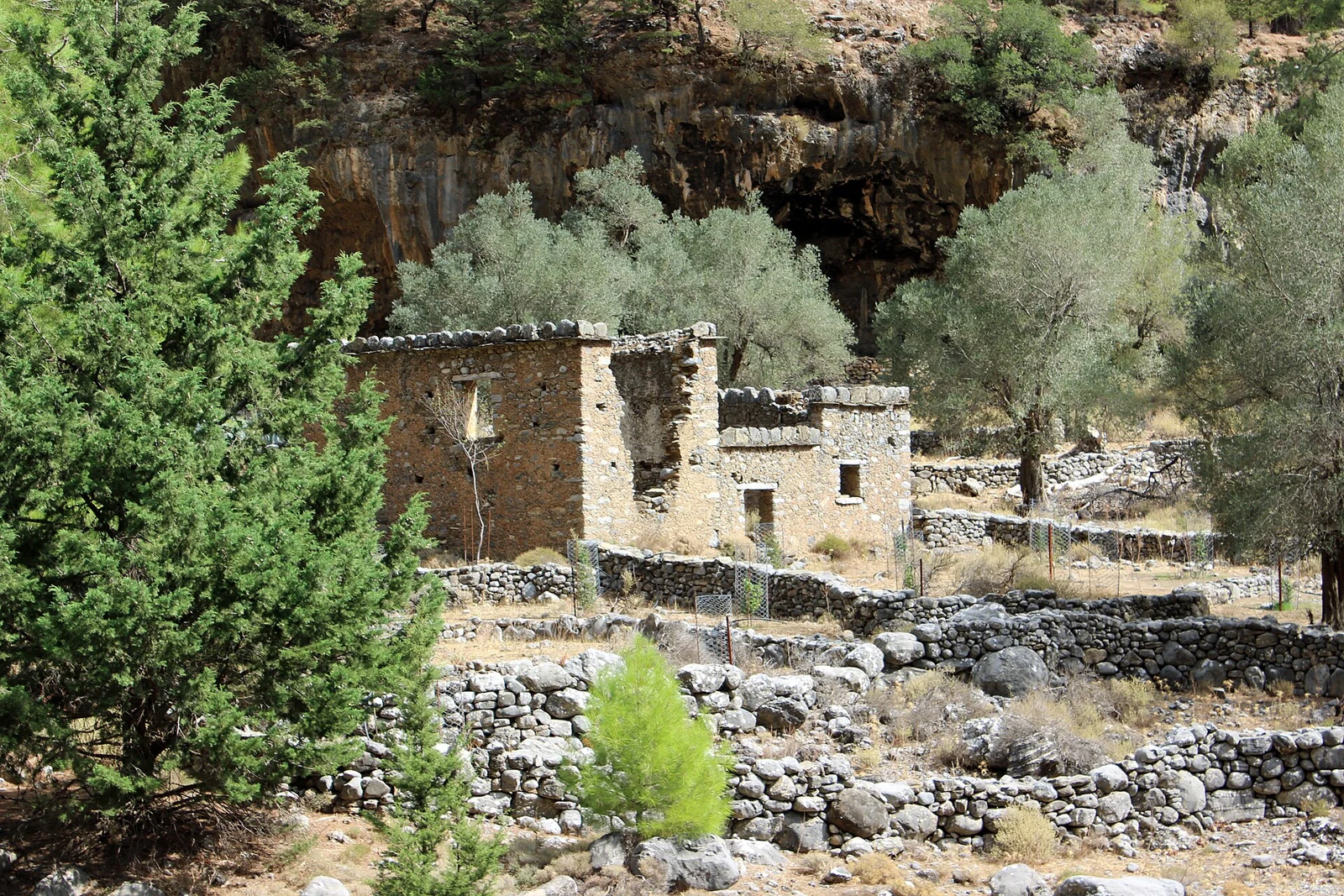
Samaria Gorge history includes ancient sites and a former village. Its churches long predate the national park. The gorge was not an empty place that became useful only when hikers arrived. Its buildings help explain how people lived in this steep part of Crete.
Read Samaria as both a protected valley and a former home. The main path passes through places with their own histories, while the coast has a different settlement story. Park status dates from 1962. That date marks a new protection regime, not the start of human presence in the gorge or a date for every surviving building.
Samaria Gorge history in a short chronology
The Ephorate of Antiquities of Chania records finds from inside the gorge. They date from the sixth century BC to the third century AD. The authority also places ancient Tarra at the coastal exit. This is now Agia Roumeli. These are distinct places within a wider story.
Its account traces later homes through the Byzantine and Venetian periods. Venetian sources mention Samaria and Agia Roumeli. It dates the church of St Mary of Egypt to the fourteenth century. That puts the old buildings in order. It does not give each one an exact founding year.
| Period or date | What the source records | How to read it |
|---|---|---|
| Ancient period | Finds inside the gorge and the site of Tarra by the coast | Different sites have different evidence |
| Byzantine and Venetian periods | Continued habitation; settlements appear in written sources | A written mention need not be the founding date |
| Fourteenth century | St Mary of Egypt church | The church's date is not the age of the whole settlement |
| 1962 | National park designation | Protection changed the use of the gorge |
| 2021–2023 | Work on five churches | Conservation is a further chapter, not a complete rebuilding date |
Scroll for more →
The final row comes from the Ephorate's church project. The Ministry of Culture approved the work. It shows recent care for the churches. It does not give permission to enter the park today.
The former village of Samaria
The village makes the human scale of the gorge easier to grasp. A home in this setting belonged to a valley with limited space and steep routes. Reading the surviving buildings as parts of a settlement is more useful than treating them only as scenery beside a rest stop.
The Greek submission on UNESCO's Tentative List describes people and the gorge over time. It links a later shift to park status. Permanent homes within the protected core ended. This is a named account of the past. It is not a current entrance notice.
Separate Samaria village from old Agia Roumeli. Their names often appear close together in route descriptions, but they refer to different settlements. The former lies within the gorge; Agia Roumeli's story includes the southern mouth and the coastal area. A photograph of one should not be used to identify the other.
The park overview by Visit Greece describes the old village on the walking route and former houses used by wardens. It gives a useful link between past settlement and the present visitor route. Do not assume that a building mentioned there is open for entry.
Churches and the name Samaria
The official churches guide names five churches. They are Agios Nikolaos, Agios Georgios, Hosia Maria, the Transfiguration of the Saviour and Afentis Christos. Each has its own name. The loose label “the old church” can cause confusion.
Hosia Maria is St Mary of Egypt. The Ephorate says the park probably takes its name from this church. Keep that word “probably”: a plausible origin reported by an authority is still different from a proven chain of name changes.
Some of the church dates are tentative too. For Agios Georgios, the authority lacks a precise date. It suggests the eighteenth century. A stated year would make that evidence sound firmer than it is. Keep the same care when a sign says a building is “believed” to date from a period.
If you want to recognise the churches during an allowed walk, save their official names and photographs beforehand. Do not leave the permitted path to seek a viewpoint or a doorway. A listed monument is not an invitation to enter a fenced area or cross unstable ground.
Protection and park management
National park designation came in 1962. Both the Ephorate's park account and the Greek UNESCO submission record it. The protected story therefore sits on top of a much longer record of settlement, worship and travel through the mountains.
The UNESCO entry is on the Tentative List. It records a Greek proposal for possible future World Heritage status. It is not proof of a place on the World Heritage List. Other protection labels do not turn that proposal into a listed site either.
For present management and entrance decisions, use NECCA and its ticket portal. Older material from the former park management body remains useful for historical context. Its opening hours or fares should not be carried forward as current facts.
Facts checked: 15 October 2026. At that check, the ticket portal reported closure from both entrances pending inspections, without a reopening date. Historical interest does not provide an exception to that notice. Read the latest statement before arranging a visit.
What to notice during a permitted visit
Look for the difference between a settlement, a religious building and a maintained visitor facility. They can sit close together while belonging to different periods. A new rail or footbridge does not date the older structure beside it.
Photograph signs as well as buildings if you want to check the names later. Keep your own observations modest: a stone wall can be visible without its age being clear. The official church records are a better source for dates than a guess based on dark stone, roof type or how weathered a surface looks.
Leave masonry and loose fragments where they are. The former park body's visitor guidance prohibits damage to cultural monuments and geological formations. Follow the current entrance instructions if they add further limits.
Return to the Samaria Gorge National Park guide to connect this heritage context with the walking and transport plan. History is part of the visit, but it should not be used to stretch a walk beyond the time or access you have.
Put the historic places on a walking plan
The Iron Gates guide places the lower rock passages in the route. That feature is not the former village or a church site. Keep the named places clear when reading a day's plan.
Compare the service around the walk
An escort may handle the return. A guide may explain the history beside your party. Ask which role is included.
Questions about Samaria's past
Was Samaria always a national park?
No. Park designation dates from 1962, while archaeological and written evidence records a much longer human presence. The former settlement and churches belong to that earlier story. Use the protection date for the park's status, rather than applying it to all the buildings or the gorge itself.
Is the former village the same as Agia Roumeli?
No. Samaria village lies within the gorge, while Agia Roumeli is associated with its southern end and the coast. Accounts of ancient Tarra concern the southern area. Match each name to the place being described before using a photograph, a route description or a historical date.
Where did the name Samaria come from?
The Ephorate of Antiquities links it, with a stated qualification, to Hosia Maria, the church of St Mary of Egypt. That is the account used here. It should retain the authority's uncertainty rather than becoming a claim that every step in the name's history is established.
Are the churches open whenever the trail is open?
Do not assume so. Park entry and access inside a monument are separate permissions. Restoration records describe work on the buildings; they do not supply today's door-opening arrangements. Follow current signs and staff instructions, and use the Ephorate's information for the heritage details you want to understand.
Verdict on Samaria Gorge history
Samaria Gorge history is best read place by place. The former village, coastal Tarra and named churches each have their own evidence. Keep tentative dates tentative, distinguish the protected park from its earlier settlements, and let current access instructions decide when this history can be seen on foot.