
Samaria Gorge shoes: footwear for the trail
Choose Samaria Gorge shoes by fit, grip and tested comfort on rough descents. Compare hiking shoes and boots without untested product rankings.
Last updated October 2026
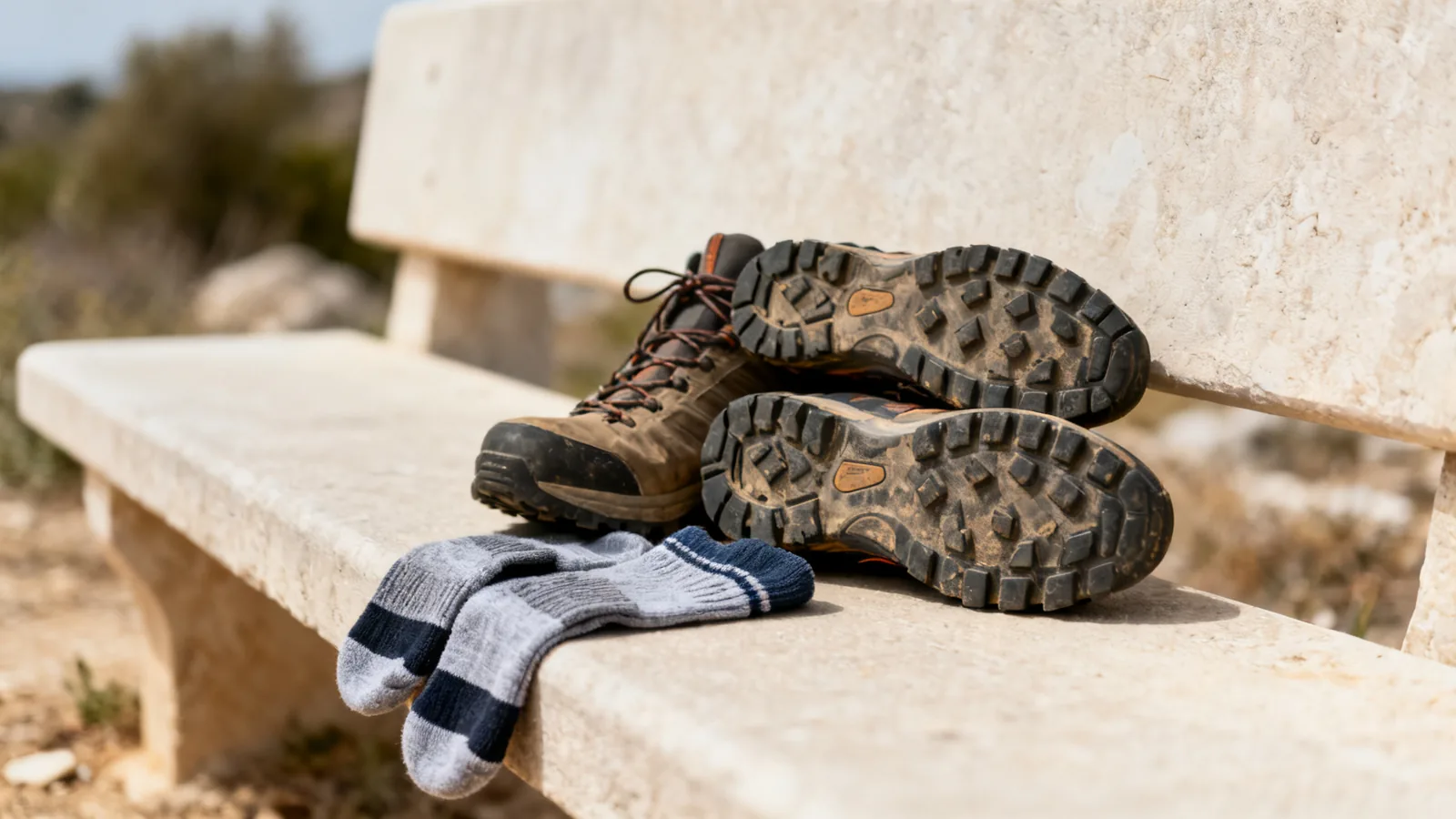
Illustrative planning photograph; this scene does not identify a particular stop, trail section or supplier.
Contents6
Choose Samaria Gorge shoes for grip, a secure fit and a long descent on stones. Familiar hiking footwear is a better starting point than a new pair bought for the trip. Try it with the socks and day pack you will use. The right shoe category cannot make up for a poor fit or worn soles.
Use well-fitting mountain-hiking footwear with sound tread, as recommended in NECCA's safety guidance. Decide between boots and lower hiking shoes from your own needs and tested comfort. Check heel hold and toe space on a slope. Pack suitable socks and deal with rubbing early. Beach sandals and a spare pair at the coast do not replace footwear for the gorge.
What Samaria Gorge shoes need to do
The NECCA Safety Regulations recommend shoes suited to mountain hiking. Its route description includes a long descent and a rocky riverbed. Footwear therefore needs to work for repeated steps on rough ground, not just for the walk from a hotel to a bus stop.
Look at the tread before you pack. A sole worn smooth in key areas is a poor choice for a route where footing matters. Check that the upper and sole are still firmly joined. A pair stored for a long time also deserves a short test walk before it becomes the only pair in your bag.
Fit matters at least as much as the label. Your heel should not keep lifting, and your toes should not hit the front with each downhill step. Test on a slope with the socks you will wear. A flat shop floor can hide a problem that appears on the first long descent.
Hiking shoes or boots
Both lower hiking shoes and boots can be sensible choices when they suit the wearer and the ground. There is no single model that this guide has tested or can rank for every foot. Choose the pair you can walk in well for the whole day, rather than the one that looks most rugged.
| Choice | Why someone may choose it | What still needs testing |
|---|---|---|
| Lower hiking shoe | Familiar feel and less material around the ankle | Heel hold, tread and comfort on stones |
| Hiking boot | A preferred fit or more coverage around the foot | Weight, heat and rubbing on a long descent |
| Trail shoe | A pair the wearer already trusts on rough ground | Sole condition and whether the setup meets their needs |
| Ordinary smooth-soled shoe | Convenient to pack | Often a poor match for the stated hiking task |
Scroll for more →
Do not change to a heavier boot solely because another visitor used one. Extra weight is not proof of better comfort. Equally, do not copy a fast walker's light setup if you have never used it on similar ground. Your test walk gives more useful evidence than a photo of someone else's shoes.
Socks and fit checks before the walk
Wear the planned socks during your trial. A different thickness can change toe room or make the heel slip. Check for seams or folds that rub, and keep a spare pair dry in the day pack. A spare pair is useful only if you can reach it without unpacking everything on the path.
Tie footwear so the foot feels secure without pressure or numbness. Recheck fit after you have walked for a while. If a heel begins to rub on a short practice walk, solve that before the trip. Do not assume hours of walking will make a painful new pair settle into shape.
Keep the load realistic during the trial. Test with the bag you will carry, including water, rather than an empty pack. The aim is to find simple faults while you can still return home easily. This is preparation, not a guarantee against foot pain.
On the route and at the coast
Give attention to new rubbing or a loose lace as soon as you can stop in a suitable place. Do not wait for a long rest if a small adjustment is clearly needed. Keep the path clear while you fix it and follow warning signs about places where stopping is unsafe.
A light spare pair may be pleasant after the walk, but it adds weight to the bag. Decide whether you need it and keep the hiking pair available for any remaining rough ground. The southern control is separate from Agia Roumeli, so reaching the gate does not end every walking task.
Use the hike guide to match footwear to the actual route choice. The ticket guide covers entry evidence and admission. Neither a good pair of boots nor a paid ticket overrides a closure or makes a poor route choice suitable.
Footwear questions
Can I wear new boots for the first time?
A long gorge walk is a poor place to discover that a new pair rubs or lets your toes slide forward. Use it on shorter walks first, including a slope and the planned socks. If it still hurts, change the setup before the trip. A brand name or price does not settle fit.
Are sandals enough for the short southern route?
A shorter route can still include stones and uneven ground. Read NECCA's advice on suitable hiking shoes and judge the permitted extent, rather than treating the word “short” as a footwear rule. Beach use and gorge use are different tasks. Plan footwear for the roughest ground you will actually walk.
Do I need to buy a particular brand?
No brand is required by this guide. We have not tested shoes or scored products. Begin with sound hiking footwear you already know, then check its fit and condition. If you need help choosing a pair, explain the long descent and rough surface to a suitable retailer and test the result before travel.
Verdict on Samaria Gorge shoes
Choose Samaria Gorge shoes by fit, grip and proven comfort on rough descents. Check the soles and practise with the full setup before your trip. A familiar pair in good condition is a useful starting point; a new purchase still has to earn that trust on shorter walks.