
Chania to Samaria Gorge: compare the day plans
Compare public buses, organised trips and driving from Chania to Samaria Gorge, with route endpoints, ticket exclusions and the full coastal return.
Last updated October 2026
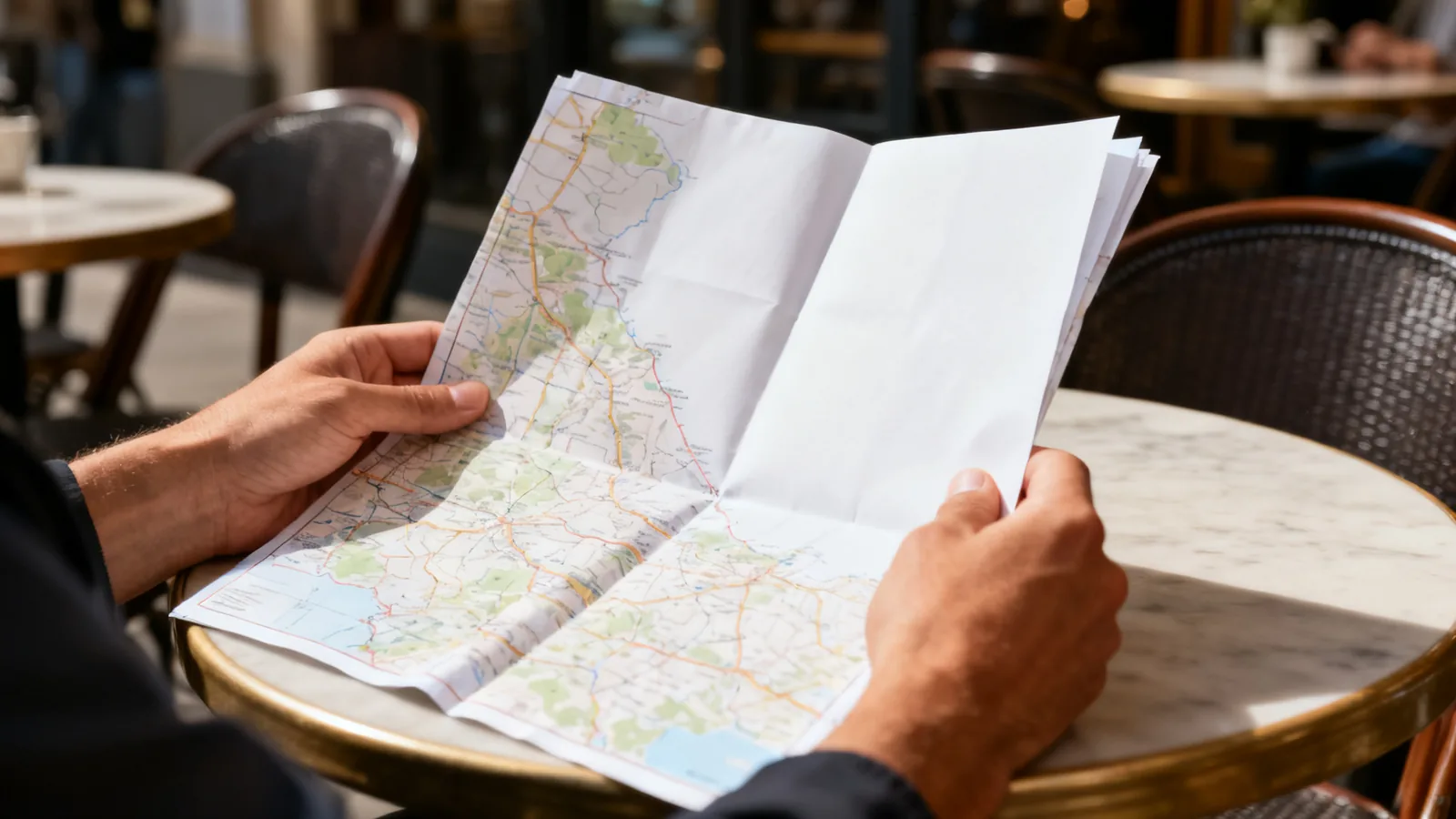
Illustrative planning photograph; this scene does not identify a particular stop, trail section or supplier.
Contents11
- Chania to Samaria Gorge: options at a glance
- Public bus plan
- Private transfer plan
- Car and recovery plan
- Escorted trip plan
- Return chain and uncertainty
- Match the plan to your needs
- If your base changes after the walk
- Current park notice and source check
- Chania transport questions
- Verdict on Chania to Samaria Gorge
Chania to Samaria Gorge is a choice between public transport, a private road transfer, driving and an organised trip. The best fit depends on where you start walking and how you return. Reaching Xyloskalo is only half the transport problem for a full crossing that ends towards Agia Roumeli.
Choose the walk first, then compare complete transport plans. A bus can remove car recovery. A taxi can give a precise pickup. Driving can suit a return-to-start visit or a confirmed recovery chain. An excursion can coordinate several legs, but its actual inclusions matter. In every case, official park access comes before the booking choice.
Chania to Samaria Gorge: options at a glance
The usual downhill start is Xyloskalo, on the Omalos side. Visit Greece describes the route towards Agia Roumeli. Keep those two ends visible when comparing prices or convenience. An outward road journey is not equivalent to a whole day with a coastal return.
| Option | Best fit | Main trade-off | Evidence you need |
|---|---|---|---|
| Public bus | A traveller whose date and boarding point fit KTEL's actual service | You match the separate return legs | Dated route and stop, plus onward services |
| Private transfer | A specific pickup need in or around Chania | One road leg may leave the return unresolved | Written quote and exact scope |
| Own or rented car | A permitted return-to-start walk, mountain stay or arranged recovery | The car stays where the walking starts | Parking instructions and recovery plan |
| Organised trip | A departure area that fits a complete offered itinerary | Fixed meeting arrangements and stated exclusions | Supplier itinerary, guide scope and terms |
Scroll for more →
There is no universal winner in that table. Compare services that solve the same task for the same party. A cheap outward ticket can still lead to a costly or awkward finish. A package can cost more while covering legs you would otherwise book separately.
Public bus with separate coastal return
Best for: Travellers who can reach the correct station and use the dated north-side service.
Evidence: KTEL supplies the actual route and ticket result. ANENDYK supplies the sea timetable.
Trade-off: You match the walk to the boat. The onward road leg needs a check too.
Private pickup to the north entrance
Best for: A party with a pickup point or timing need that the public service does not meet.
Evidence to request: A quote naming the actual origin, Xyloskalo and the service date.
Trade-off: A one-way transfer buys only that road leg unless the written terms include more.
Drive with the finish already arranged
Best for: A permitted partial walk or a full crossing with a real return to the parking place.
Evidence: Current parking instructions plus the dated sea and road recovery services.
Trade-off: The full crossing ends away from the car and can add several return tasks.
Excursion with coordinated transfers
Best for: A visitor whose lodging and intended walk match the organiser's stated pickup and return.
Evidence to request: The exact itinerary, included costs and cancellation terms.
Trade-off: A bus escort may not be a walking guide beside every participant.
These are service types, not claims that a specific departure is available. Use the evidence for the actual date and operator before paying. No card here changes an entrance restriction or promises an easy walk.
Public bus plan
Begin with KTEL Chania–Rethymno's current website. It links to schedules and its official ticket service. Find the north-side route for your intended day and confirm that the stop serves Xyloskalo. The wider name Omalos needs that final stop check.
Then work out how you will reach the station from your lodging. A traveller already near the intercity station has a different morning from someone arriving from an airport or resort. Compare the complete approach, not only the time printed for the mountain bus.
Get the actual boarding point from KTEL or your ticket. Do not wait at a local city-bus stop because it shares a familiar place name. Save the station and route details before the morning of the walk. Keep a copy offline with the rest of the day's tickets.
What the bus solves
The bus can take away the need to park a private car at the north entrance. That matters because the full crossing finishes on another side of the mountains. You can plan the coastal return towards your base without first having to retrieve a vehicle from the start.
It does not remove every booking task. Check admission and the sea leg separately unless the product includes them. The road return from the coastal arrival port also needs a dated check. Treat the outward bus as one service within that chain.
Read the actual carrier result for fare and traveller category. We do not quote an old tourism-page amount as today's bus price. The figure you compare with a taxi should cover the same travellers and the same origin-to-destination task.
What to check before buying
Confirm the service date, weekday pattern and stop. Read current announcements as well as the published schedule. A morning route mentioned in a summer article may not operate under the same pattern later in the season.
Check any luggage or assistance needs directly with the carrier. A normal day bag is a different request from large equipment or particular seating needs. The route name alone cannot establish the vehicle or facilities used on one departure.
Keep the ticket's change and cancellation conditions. If the park closes, the carrier's terms still decide what happens to a separate transport booking. Do not assume that an official closure automatically converts every ticket into a refundable one.
When public transport is the better starting point
Check it first if you can reach the station easily. It may fit when you do not need a car elsewhere that day. The absence of car recovery can make the whole return simpler. That benefit is real even though you still need to match several services.
It is a weaker fit if the actual service does not match your date or cannot serve your entrance. Do not force it by using a different destination that only looks nearby. Compare a precise transfer or a different overnight arrangement when the necessary bus cannot be confirmed.
Private transfer plan
A taxi or private transfer can begin at an agreed pickup point. This can help with a lodging address outside the useful bus approach. It may suit a party that wants the road leg arranged together. Check the vehicle offered. Read its actual terms too.
The quote should name the drop-off. Xyloskalo entrance, an Omalos lodging address and another mountain walk are different requests. “Samaria” alone leaves too much open if the driver and passenger are picturing different ends of the park.
Give the travel date and the number of passengers. State any bags and equipment before accepting the price. Mention seating needs too. A generic taxi photograph does not identify the vehicle you will use. Ask what that vehicle can carry.
Compare the right scope
Ask for the total for the service you are discussing and any stated extras. Confirm whether it is a one-way road trip or part of a broader arrangement. Compare it with the same legs in the bus or excursion plan, rather than one low headline fare from each.
If the quote is only to the mountain start, the return remains yours to solve. A full crossing ends on the coast. The driver who drops you at Xyloskalo is not automatically providing a pickup at the southern park exit.
If a return is included, ask where the return road trip begins. Name the ferry port and identify any sea ticket that remains separate. Get the sequence in writing. A broad “round trip” label may not explain the one-way walk.
Timing and cancellation
Ask the operator about the road journey for your actual pickup point. We do not give one fixed driving time for every Chania address. Check the current permitted entry period as well, so the quote and the walking plan fit the same day.
Keep the meeting instructions and contact details offline. Agree what happens if the pickup is missed or the park is closed. A closure instruction belongs to NECCA, while the transfer booking has the operator's own amendment and refund rules.
Do not assume that a private vehicle grants an entry exception. It may be able to reach the area while the gorge itself is unavailable. Confirm access before paying for a hike-led transfer or leaving your base.
When a transfer earns its extra cost
Its useful benefit is a specific service gap that you can name. Perhaps the public route does not serve the needed pickup point, or your party needs an agreed vehicle arrangement. Compare an actual quote for that task rather than a general claim that taxis are always more convenient.
It is less useful if the only reason is avoiding the first bus while ignoring the harder return. Keep the boat and last road leg in view. A smooth outward pickup should not hide an unconfirmed way home.
Car and recovery plan
Driving gives control over the outward departure and may fit a wider stay near the plateau. For a full crossing, however, the vehicle remains near the walking start while you finish towards Agia Roumeli. That is a different problem from an ordinary return drive after a short walk.
Write the precise parking location as the final destination of the day. Work backwards through the land transfer, arrival port and sea leg. The plan is not complete if it reaches only Chania or a different point in the Omalos area.
Confirm the current parking arrangement when you arrive. Follow signs and staff instructions, including any payment or access hours. We do not assume free parking from an old photograph or print a charge without a dated source for the actual area.
Recovering the vehicle
ANENDYK's timetable refers passengers to KTEL about buses from Sougia towards Omalos and Chania after a ship arrives. Check the actual dated service and stop. That footnote is a reason to investigate the west-side plan, not proof that every boat returns you to your vehicle.
If the return uses a private road transfer, get the destination in writing. A quote to Chania does not cover the mountain parking area by implication. Include the expected sea arrival and the meeting point when asking about a ferry-linked pickup.
Read what happens if a required service fails. A parked car can remain a recovery task even when you have found somewhere to sleep. Check any restrictions that affect leaving it overnight, and keep the parking contact or instructions with you.
An alternative walk with the car at one end
A permitted out-and-back can return to the same entrance. That avoids the separate sea-and-road recovery chain. It also changes the walking task, since part of the route is covered twice and a northern return includes uphill work.
Check the current extent allowed from that entrance. A partial walk described by an older guide is not a permanent permission. Set a turnaround that fits your party and the park rules. Do this before entering. Do not keep going until you feel tired.
Do not confuse this with completing the full crossing. The attraction of a simpler car finish has a trade-off: you see a different portion of the route. Choose the visit you actually want, then judge whether that trade-off fits.
Rental-car details
If the vehicle is rented, read the agreement for the route and use you intend. Ask the rental company about any unclear restriction. This guide cannot confirm the terms of an individual booking or vehicle.
A plan involving a vehicle on a ferry needs two distinct checks: the carrier's exact sailing and the rental agreement. Some ANENDYK departures are passenger-only. Do not infer vehicle permission from a photograph of a car-carrying ship on another route.
Keep the travel tickets with the walkers, rather than leaving every confirmation in the car. You will need the sea and land details at the southern end. Save the parking point too, so an onward driver knows the place you must reach.
Escorted trip plan
An organised trip can coordinate several transport legs. That can suit a visitor who wants the day arranged around a stated departure area and return. The benefit depends on what the actual itinerary includes, not simply the use of the word tour.
Start with the pickup. Chania city, an airport and a coastal resort are different locations. A product with “from Chania” in its title may have a specific meeting point or pickup zone. Confirm your own address or agreed stop with the organiser.
Then read the walking route. Identify whether it is the full crossing, a southern visit or a coastal stop. Similar product titles can describe very different days. A trip that reaches Agia Roumeli by boat does not deliver the usual northern start.
Guide or escort?
An escort may coordinate the bus and the day's transfers. A walking guide may have a different role on the path. Ask what the service actually provides and how participants are expected to walk. Do not assume that someone stays beside every visitor throughout the gorge.
If you need a closely supervised pace or help with a specific walking requirement, ask directly. The organiser should describe whether the service fits. Neither an escort nor a group booking changes the terrain, the distance or an official closure.
Keep the meeting instructions for the end of the walk as well as the start. Ask how the organiser accounts for participants and what to do if your pace differs from the group. A verbal summary at pickup should not be the only record of an important return arrangement.
Included costs and exclusions
Check admission and ferry tickets separately in the itinerary. Ask about meals and any other cost you expect to pay. A headline excursion price is not a complete total until the relevant exclusions are clear.
Compare the actual package with the full independent chain. If one price covers pickup and the final return while another covers only a bus outward, they are not the same purchase. Do not label one cheaper without matching what each includes.
Read the supplier and cancellation terms before paying. The business operating the excursion and the platform displaying it may have different functions. Keep the actual provider name and contact details with the booking rather than only a search-page screenshot.
Closure handling
Ask what happens if the park is closed or the route is altered. Check whether the organiser cancels, moves the date or offers another activity. Read the actual terms. A service advertised for sale does not overrule NECCA's access notice.
If you buy separate lodging or other transport around a tour, those bookings keep their own conditions. The excursion's cancellation rule does not automatically decide the refund for every part of your holiday. Read the relevant terms before making a tightly linked plan.
Return chain and uncertainty
For a full crossing, begin the return at the coastal side after reaching Agia Roumeli. Choose the sea destination that serves the final base or car. Then confirm the actual bus or transfer from that port. The day does not end merely because you have reached a road-accessible village.
The east-side pattern uses Hora Sfakion, often called Sfakia. The west-side pattern can use Sougia. These lead to different road tasks. Keep the arrival port attached to the correct bus rather than treating every south-coast service as interchangeable.
The Chania–Sougia bus guide focuses on that western road connection. Use it when Sougia belongs in your actual chain. For the wider sea and land choices, return to the transport reference.
Distinguish three kinds of evidence
An old tourism account can explain the general route. A current timetable supplies a published service pattern for a stated period. Your actual booking and current carrier instruction describe the service you intend to use. Keep those records distinct.
A timetable is not a forecast of sea conditions. A ticket does not mean a delay is impossible. A reference to a bus after a ship arrives is not a universal connection guarantee. These limits matter most when several separately booked legs must fit together.
Do not turn an unclear lookup into an invented service. If the required route or stop cannot be confirmed, ask the carrier or revise the plan. A missing result does not prove the route has ended for good. It is not enough to rely on either.
Keep a usable record of the day
Save each ticket with its origin and destination. Include route headings and timetable footnotes when taking screenshots. A cropped time is easy to misread later. Keep the contacts and meeting points where you can read them without data.
Name the final local leg too. If the bus ends at an intercity station, your lodging may still be elsewhere. If the goal is a parked car, a broad plateau destination may leave a gap. Complete that last piece before calling the return arranged.
Match the plan to your needs
Compare a real quote with a real ticket
Put the origin and final destination beside each price you collect. Use the same date and party size. Include the last ride back to your base. This makes the comparison fair before you look at the total.
A private quote may cover a whole vehicle. A public fare may be for one person. Read what each amount buys before multiplying or dividing it. Do not assume that every traveller uses the same admission category either. The actual provider terms should settle those details.
Keep the currency stated with the quote. If you compare amounts in another currency, use a dated rate and label the conversion. A bank or card provider may use different terms for the payment. The amount shown on a guide should not be treated as a promised final card charge.
Check the finish in the same way as the pickup. A quote that returns to your door covers a different task from a ticket ending at a station. Decide whether that difference matters to you. If it does, include the extra local leg before comparing the plans.
Keep the chosen service tied to your walk
After choosing an option, read the whole route once more. Name the entrance first. Follow the walk to its actual end. Then name the boat and the road leg that come after it. This simple check can catch a booking made for the wrong side.
Check the date on each confirmation too. The road outward and sea return should serve the day you intend. An overnight plan may use different dates, but that must be deliberate. Do not leave a mismatch to be resolved at a port.
If the service description changes before travel, compare it with the reason you chose it. A different pickup point or return port can affect the rest of the plan. Ask the provider to explain the revised scope before assuming that the old connections still fit.
Fit the complete day
If you can reach the station and the dated service fits, check the bus plan first. Its useful advantage is avoiding a car left at the mountain start. You still need to confirm the coastal return, but the final destination can be your base rather than a recovery detour.
If your pickup need is the main obstacle, compare a precise private transfer. Ask what it solves and what remains. A one-way quote can be a good fit without pretending to be a complete round trip.
If a car is already part of a mountain stay, assess the parking and walking choice together. A permitted return-to-start visit may fit that stay. A full crossing needs a recovery chain, and the extra work should remain visible in the comparison.
If coordinating several carriers is the part you want arranged, compare an excursion whose actual itinerary covers those legs. Check the pickup zone and walking scope first. Paying an organiser is useful only when the offered day matches the one you intend.
If the necessary return cannot be confirmed for any option, change the day plan or overnight base. Do not force the choice by ignoring the missing leg. The safest answer to an incomplete timetable is not an optimistic walking target or an assumed lift at the end.
If your base changes after the walk
A one-way holiday itinerary changes the transport comparison. If you plan to leave Chania and sleep at the coast, a return to the original room is no longer the main task. Confirm the new room and the next sea journey, then compare the outward ride to the walking start. Do not pay for a round trip merely because it is the first option shown.
Luggage needs its own plan. A suitcase suitable for a holiday base may be a poor load for the gorge. Ask the actual accommodation or transport firm whether it can store or move a bag; do not infer that service from a room or vehicle booking. Keep the answer and any charge with the trip details.
If you leave a car or bag in Chania, include its later collection in the wider itinerary. A coastal night can remove the same-day rush without removing that future recovery task. The best choice is the one that joins the whole holiday route, not only the day's first bus or road ride.
Current park notice and source check
Facts checked: 15 October 2026. NECCA's official portal reported both entrances closed pending inspections, without a reopening date. Check that source again before arranging a hike-led departure. General seasonal descriptions and available tour listings do not establish today's permission.
The transport sources used here are ANENDYK for the sea routes and KTEL for the official road lookup. We quote no fixed all-inclusive fare or driving time. Any total or timing comparison should use the actual services for your party and date, with the exclusions visible.
Chania transport questions
Which option is cheapest?
Compare current prices for the same complete task. A bus outward, a taxi to the entrance and an excursion with several transfers cover different things. Include admission and any separate sea or road legs where relevant. We do not call an option cheapest using old fares or unmatched service scopes.
Does driving make the return simpler?
Only if the walking route and recovery arrangement fit. A full crossing leaves the car at the northern start while you finish towards the sea. A permitted out-and-back can return to the car, but changes the walk. Compare those complete choices rather than judging only the outward drive.
Does a tour mean a guide walks with me?
Ask the actual organiser. A bus escort and a walking guide are different service descriptions, and some trips let participants walk at their own pace. Read the itinerary and ask about the help you need. Do not infer continuous personal guidance from a general excursion title.
Can I choose the return after I finish?
Do not rely on an unconfirmed return. Check the date and destination of the necessary boat and road service before the walk. If disruption occurs later, follow the operators' current instructions. A hope of finding a taxi or another bus should not be the original plan for reaching your base.
Verdict on Chania to Samaria Gorge
Choose Chania to Samaria Gorge transport by the whole route. A bus or transfer can fit one need. A car or excursion can fit another. Each must reach the correct entrance and solve the finish.
Check official access first. Compare matching scopes and keep the last return leg as clear as the first pickup.